
I. ECONOMY
The economy of Prosperia is defined by circulation, ownership, specialization, and strategic exposure.
Wealth enters the world through agriculture, maritime industry, subterranean excavation, contracts, bounty networks, territorial taxation, and relic-grade gear economies.
Crop farming remains one of the enduring pillars of this structure, sustaining both direct trade and larger industrial supply chains. Fishing and mining expand this further through custom rarity systems, while territorial ownership introduces treasury mechanics, upkeep, taxation, and tribute.
The result is not merely a market of sold items, but a world where value emerges from how players embed themselves within its infrastructure.
II. LANDS, NATIONS & WARS
Territory is the sovereign skeleton of Prosperia.
Lands
A land begins as protected territory and evolves into treasury-backed infrastructure.
Land Values
- chunk claim: $100
- unclaim cashback: 15%
- rename: $3,000
- transfer ownership: $5,000
- upkeep: $500 per chunk / 7 days
- upkeep grace for new lands: 3 days
- bank enabled
- owner replacement on inactivity: enabled
The treasury system allows claims, upkeep, and territorial actions to operate through formal land banks rather than purely personal balances.
When a land joins a nation, its upkeep is automatically paid by the nation's treasury. Nations typically tax their lands to cover these upkeep costs, with the tax appearing as part of the land's upkeep expenses.
Nations
Nations transform multiple lands into fiscal and geopolitical blocs.
Nation Values
- creation: $10,000
- rename: $1,000
- tag length: 1–4
- tax cap: $5,000 per chunk
- upkeep: $450 per chunk
- new nation grace: 3 days
- unpaid land taxes remove the land from nation
Nation Power Index
Nation Power Index is calculated from weighted military, territorial, treasury, and population stats.
Formula
Power =
- kills x 1.0
- deaths x -0.5
- war wins x 35.0
- claimed chunks x 0.75
- bank balance x 0.00005
- members x 40.0
- K/D x 125.0
Primary Factors
- members: nation member count
- K/D: nation kill/death ratio
Smaller Factors
- kills
- war wins
- claimed chunks
- bank balance
The heaviest influence comes from member count and K/D, while raw kills, war success, territorial footprint, and treasury depth act as secondary contributors.
A nation therefore behaves less like an alliance and more like a treasury-linked empire.
War Doctrine
Wars are structured territorial campaigns.
Declaration
- attacker minimum treasury: $5,000
- preparation phase: 1 day / 24 hours
- global broadcast: enabled
- mutual acceptance: disabled
Capture Warfare
- max active capture points: 3
- hold duration: 10 minutes
- placement cooldown: 10 minutes
- valid Y range: 30–300
- successful captures unclaim territory
Scoring
- player elimination: 3
- flag capture: 5
- break enemy flag: 3
- explode enemy flag: 5
Surrender
- defender tribute: up to 75% of land money
- attacker tribute: up to 75% of land money
War Shields
- creation shield: 3 days
- pre-war surrender: 1 day
- post-surrender: 5 days
- post-war: 7 days
Combat Logistics
- war keep inventory: enabled
- invasion requires 1 defender online
- post logout invasion grace: 1 minute
- ladders, vines, scaffolding usable during invasions
III. PYROMINING
The mines of Prosperia contain a buried secondary economy.
Mining gradually reveals:
- fluxes
- gemstones
- mysterious dust
- artifacts
- fossils
- vessels
- runes
- oracleite
- guardian entities
Gemstone Ladder
- Tier I: $150
- Tier II: $350
- Tier III: $500
- Tier IV: $750
- Tier V: $1,000
- Tier VI: $1,500
Each may emerge in varying conditions, altering its value through preservation multipliers.
Artifacts
Artifacts emerge at 0.8% per ore break, ranging from Basic ($150) to Divine ($3,000). Identification times scale from 20 minutes to 280 minutes.
Hostile Systems
- Vessel bosses
- Thralls
- Rune Guardians
- Oracle encounters
At this stage, the mine ceases to resemble a resource field and begins to feel archival.
IV. PYROFISHING
The waters of Prosperia form their own maritime economy.
Rarity Structure
- Bronze: 65%
- Silver: 20%
- Gold: 7.5%
- Diamond: 2%
- Platinum: 0.4%
- Mythical: 0.03%
Sell Values
- Bronze: $75
- Silver: $175
- Gold: $250
- Diamond: $450
- Platinum: $4,500
- Mythical: $20,000
Entropy
- Bronze: 40
- Silver: 70
- Gold: 120
- Diamond: 200
- Platinum: 425
- Mythical: 1,500
Fishing Systems
- crab encounters
- codex completion
- deliveries
- fish scales
- gutting
- party fishing
- biome and weather interactions
- rod specialization augments
Over time, the harbor becomes less a shoreline and more an industry.
V. EXCELLENT ENCHANTS
Equipment on Prosperia develops identity through enchant doctrine.
Excellent Enchants extend armor, weapons, tools, bows, and fishing rods into layered specialization.
Armor
- Dragon Heart
- Hardened
- Regrowth
- Fire Shield
- Ice Shield
- Speed
- Night Vision
Weapons
- Vampire
- Venom
- Thunder
- Decapitator
- Swiper
- Wisdom
- Rage
Bows
- Explosive Arrows
- Bomber
- Ender Bow
- Sniper
- Poisoned
- Electrified
Industry
- Veinminer
- Tunnel
- Telekinesis
- Smelter
- Treefeller
- Replanter
- Silk Spawner
Relic Preservation
- Soulbound
- Restore
- curse-grade enchantments
The same piece of equipment may therefore become war relic, industrial instrument, or personal signature.
VI. BOUNTIES
The bounty network operates through anonymous contracts.
Using NotBounties, players may place hidden treasury rewards on specific targets without revealing the issuer.
This introduces a layer of:
- silent retaliation
- wartime destabilization
- political pressure
- covert punishment
The true source of the contract remains concealed.
VII. ORDERS
The Donut Order network formalizes requested goods into contracts.
Blocks, crafted items, rare materials, relic drops, and industrial components may all circulate through structured item commissions.
This system silently supports:
- construction
- industrial growth
- logistics
- supply chains
- territorial expansion
without exposing the underlying actors.
VIII. UTILITY SYSTEMS
Compact tools for mob transport, web control, chance items, and survival logistics.
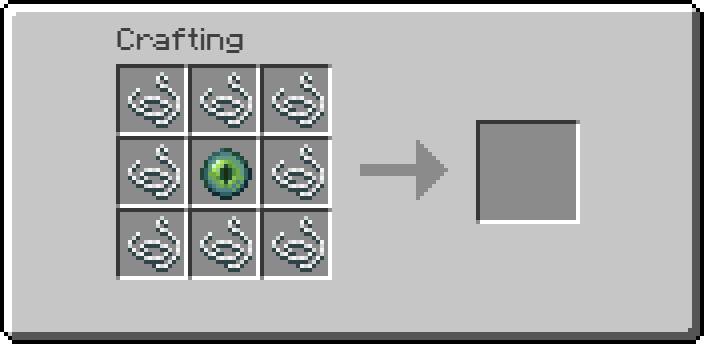
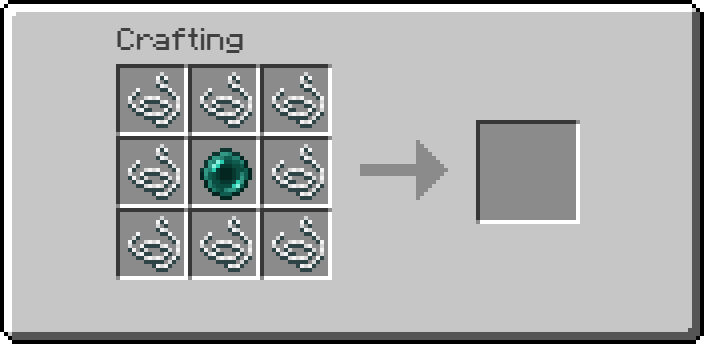
Safari Nets
Portable containment for villagers, livestock, hostile mobs, and utility mobs. The Eye of Ender variant is reusable, while the Ender Pearl variant is single-use.
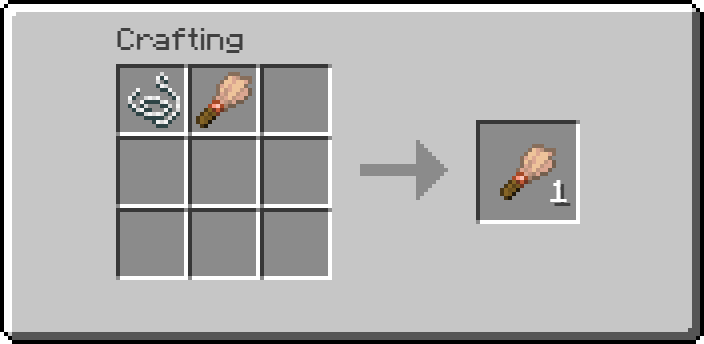
Web Duster
A modified brush used for cobweb handling, giving builders and explorers a dedicated tool for web-heavy areas.
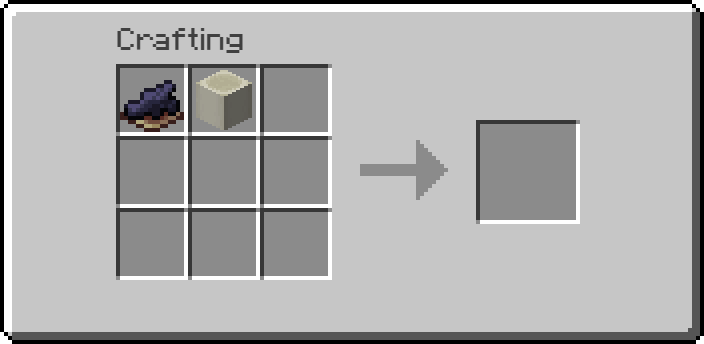
Rolling Dice
A compact chance item crafted from Black Dye and a Bone Block for player-made games, events, and decisions.
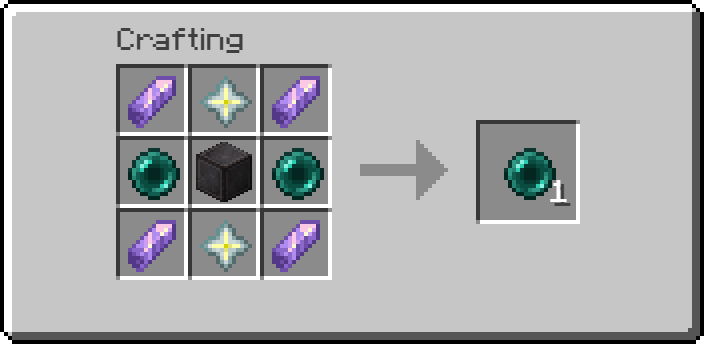
Relic Pearl
A one-use teleport item that instantly pulls the player to the active Dragon Egg relic stand. It locks onto the current relic location and teleports the player to a safe spot near the stand, making it a fast way to re-enter the relic fight and contest the Egg.
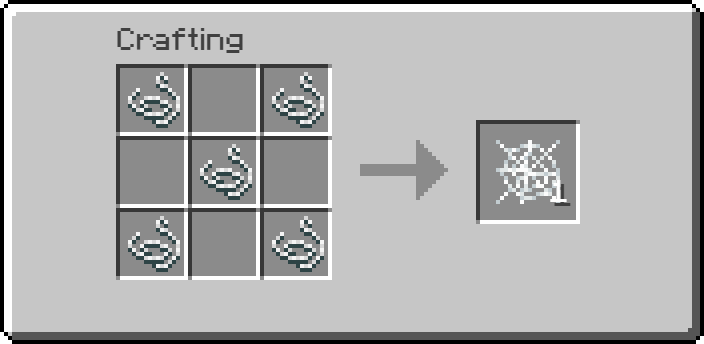
Cobweb Crafting
String can be woven back into cobwebs for traps, decoration, redstone layouts, and utility builds.
Relic Dragon Egg Protocol
The true Relic Dragon Egg is not ordinary loot. It is a contested world objective, and the server expects it to remain exposed, vulnerable, and politically relevant.
Storage Restrictions
The Relic Dragon Egg cannot be stored like a normal item. It may be carried for short periods, but it cannot be safely kept in chests, vaults, shulkers, bundles, graves, or other forms of storage.
Proper Resting Place
If it is not actively being moved, its only proper resting place is a Relic Stand. A valid stand is built on a Netherite Block, with the Egg placed above it, and it must have a clear 5x5x5 space around it.
Transport Risk
Carrying the Relic Dragon Egg for too long is dangerous. Its power begins to affect the holder, causing increasingly severe negative effects and turning prolonged transport into a real risk rather than a safe strategy.
Logout Penalty
Logging out with the true Relic Dragon Egg is even more punishing: a player who leaves the server while carrying it will die, preventing the relic from being hidden offline.
Because of this, becoming the Custodian of the Relic Dragon Egg is not just about possessing it, but about protecting it properly, managing the danger of moving it, and maintaining control of its stand under constant threat.
Disenchanting
By combining an enchanted item and a book inside an anvil, enchantments may be extracted one by one, preserving the remaining identity of the item.
This turns gear maintenance into a form of equipment archaeology.
IX. COMMAND CODEX
Territory
/lands
/l claim
/l unclaim
/l trust
/l deposit
/l withdraw
/l map
Nations
/n
/n create
/n invite
/n accept
/n relation
Wars
/w
/w declare
/w surrender
/w deny
/w info
Fishing
/fish
/fish codex
/fish deliveries
/fish gut
/fish scales
Mining
/mine
/mine journal
/mine artifacts
/mine vessels
Utility
/bounty
/orders
/disenchant
/net
/skills
X. RANKS
Ranks in Prosperia are earned through gameplay — not purchased. Every rank is obtainable through in-game resources and levels. There is no shortcut. Your rank reflects your commitment to the world.
Use /ranklist to view all available ranks and their requirements. Use /rankup (rank) to advance when you meet the criteria.
- 2 homes
- 1 pwarp
- 2 jobs
- 1 vaults
- 300 chunks
- 3 Lands
- 3 homes
- 2 pwarps
- 3 jobs
- 1 vaults
- 300 chunks
- 3 Lands
- 4 homes
- 3 pwarps
- 4 jobs
- 2 vaults
- 600 chunks
- 4 Lands
- 5 homes
- 4 pwarps
- 4 jobs
- 2 vaults
- 600 chunks
- 4 Lands
- 6 homes
- 5 pwarps
- 5 jobs
- 3 vaults
- 900 chunks
- 5 Lands
- 8 homes
- 6 pwarps
- 5 jobs
- 3 vaults
- 900 chunks
- 5 Lands
- 10 homes
- 7 pwarps
- 5 jobs
- 4 vaults
- 1200 chunks
- 6 Lands
/pweather/ptime
- 12 homes
- 8 pwarps
- 5 jobs
- 4 vaults
- 1200 chunks
- 6 Lands
/pweather/ptime- Message color